
How to Search the Waterloo Court Docket
Skip the idea of a Waterloo-only docket viewer; one does not exist. Instead, open the Indiana MyCase search. Pick DeKalb County there, and query the statewide Odyssey records open to the public. A complete cause number gives the strongest start. Try a party name if you lack the number. Put a UTT in the Citation Number field. MyCase reads Case Number, Citation Number, and Cross Reference as substitutes for one another. Enter just one at a time.
- Read the court name, cause number, UTT, and hearing information on any notice or citation.
- Open MyCase and select DeKalb County rather than leaving the search statewide.
- Use one case identifier, or use the Name tab with a last name and helpful filters.
- Open the matching case summary and read the newest events, hearings, and orders.
- Ask the named court or DeKalb County Clerk to confirm a close setting or official record.
An empty result does not mean no case exists. Check the spelling, the court you selected, the date range, and how the number is formatted. Confidential matters can be missing or limited, including juvenile, mental-health, sealed, expunged, and older converted files. Protection-order cases run through a separate authorized public route. Ordinary MyCase name searching excludes protected-party data.
Waterloo Has No Listed City Court
The Indiana court directory lists no city or town court for Waterloo. The MyCase court list contains none either. Butler City Court stands as the only separately listed city-court venue in DeKalb County. So do not hunt for a Waterloo Municipal Court portal, judge, courtroom, or payment page. The official sources name none of those. The official Town of Waterloo website covers town government. It offers local contacts rather than a judicial docket.
The town website does help fix the local-government boundary. A Waterloo police encounter, citation, or dispute can still become a court case, but the record stays with the court named on the ticket or filing. For most local searching, choose DeKalb County in MyCase first. Then go to the county Clerk or the assigned division if the online case summary falls short.
The Waterloo Municipal Court Question
No municipal court serves Waterloo. Its residents' cases go to DeKalb Circuit Court, DeKalb Superior Court I, or DeKalb Superior Court II, depending on case type and the local allocation plan. Butler City Court shows up only when that city court truly holds the matter. Where something happened does not create Waterloo jurisdiction or pick the county division.
The allocation plan offers useful clues for a search. DeKalb Superior Court II holds exclusive assignments for infractions, small claims, eviction, civil collection, mortgage foreclosure, tort, estates, trusts, and Waterloo civil plenary matters. Superior Court I takes Waterloo moving ordinance violations, misdemeanors, and specified criminal classes. Circuit Court keeps exclusive juvenile and reciprocal-support categories and shares other rotating Waterloo matters. Treat these as routing aids, not a license to guess. The case header, citation, summons, or Clerk controls.
Waterloo Town Clerk Versus Court Clerk
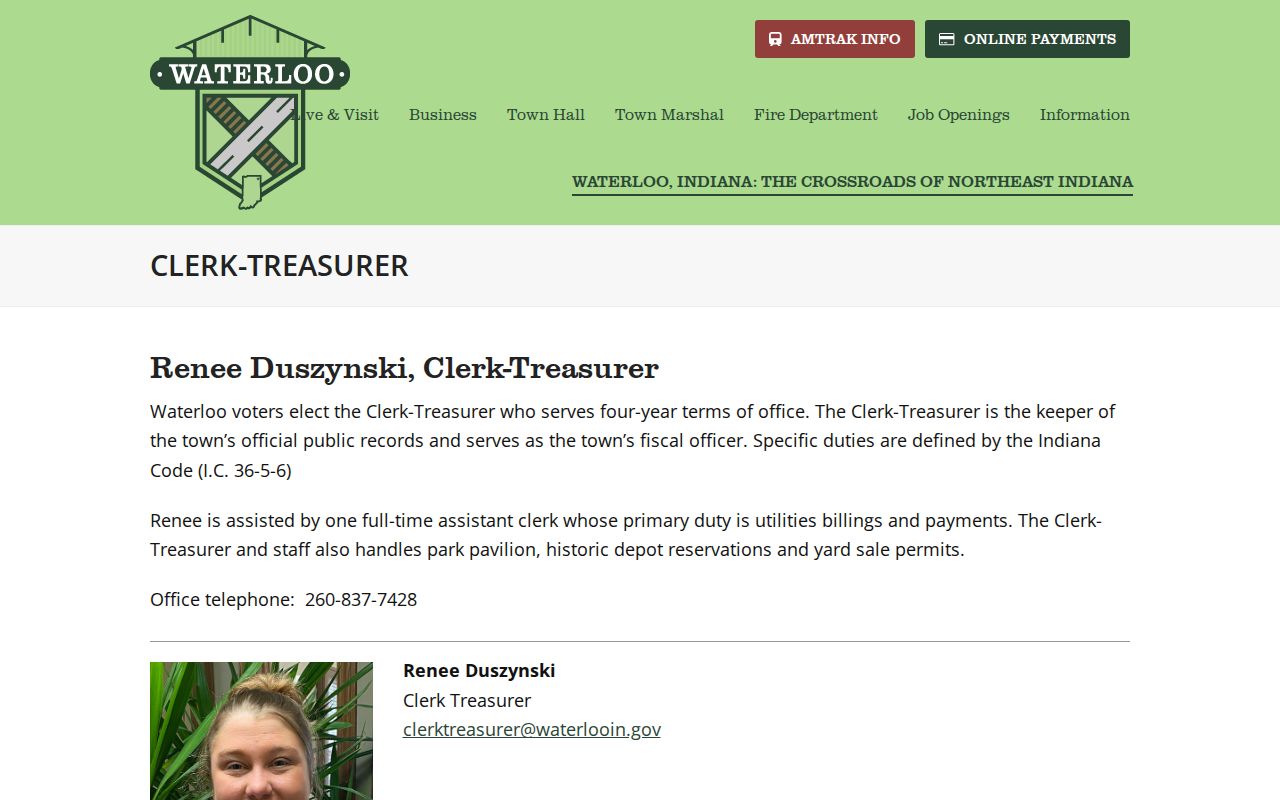
Two different offices answer to the word clerk here. Waterloo Clerk-Treasurer Renee Duszynski works from Town Hall at 280 South Wayne Street. Reach her at (260) 837-7428. Her office handles Waterloo government business and civic records. It does not keep the Chronological Case Summary for DeKalb trial-court cases. Nor can it certify a court order, adjust a court balance, or reset a hearing. The Waterloo Clerk-Treasurer page names the town official and her municipal contact route.
Waterloo court records belong to the DeKalb County Clerk of the Circuit Court instead. That office sits at 100 S. Main Street in Auburn. Mail goes to PO Box 230, Auburn, IN 46706. Call (260) 925-0912 for main and civil matters, (260) 925-4575 for criminal, (260) 925-1315 for small claims, and (260) 925-4576 for Waterloo traffic. A simple rule keeps it straight. Use the Waterloo clerk for a town record. Use the county Clerk for a court record.
Waterloo Court Dates and Settings
The county posts no separate daily Waterloo hearing calendar. A court date tied to Waterloo normally sits in the MyCase hearing or session data. That data belongs to its assigned DeKalb court. Read the newest event plus any filed notice or order. After a continuance, reset, or cancellation, an older date can linger in the event history. An Open status never proves a given hearing still stands.
| Date | The newest scheduled date shown in the hearing event or controlling court order. |
|---|---|
| Time | The session time, which may differ from a separate arrival instruction. |
| Courtroom | The DeKalb court and location stated in the event or notice. |
| Judge | The judicial officer associated with the public setting when displayed. |
| Setting Type | Initial hearing, pretrial, motion hearing, trial, compliance, or another event label. |
For a near-term setting, follow a verification chain: the newest filed notice or order, then the newest MyCase hearing event, then the assigned court's direct line, then the Clerk. Waterloo Circuit Court answers at (260) 925-2764, Superior I at (260) 925-4723, and Superior II at (260) 925-5277. A reminder text helps. It cannot replace the court's own notice.
Waterloo MyCase Results Explained
A MyCase result for a Waterloo case pulls from Odyssey. It works as a reference display. The header names the court and the case number. It also lists the filing date, the case type, the status, the parties, and the judicial officer. Indiana calls the event register a Chronological Case Summary. It logs filings, orders, hearings, scheduling activity, disposition events, and other court actions. A document link shows up only when the case and document class allow online access.
Cause numbers matter for a Waterloo docket search. DeKalb County cases start with county code 17. The next segment points to a specific court: 17C01 for Waterloo Circuit, 17D01 for Waterloo Superior I, or 17D02 for Waterloo Superior II. After that, the year and month segment reflects when the case was filed. A two-letter code marks the case type. The final sequence picks out that one filing. Older converted records can look odd. A legacy number is still valid even when its layout differs.
Money fields have limits too. An amount or payment event on a Waterloo case is not an official balance. It is not a certification of satisfaction, and not proof that a recent payment posted. When the difference counts, ask the DeKalb County Clerk. The Clerk can supply an official balance or a certified financial record.
Waterloo Traffic Tickets
Waterloo offers no ticket-search or payment portal of its own. Start instead with what the citation itself prints. That means the court, the UTT, the cause number, the appearance date, and the instructions. In MyCase, search by Citation Number or Case Number, but never both in one query. Under the county's allocation plan, IF infractions go to DeKalb Superior Court II. Moving OV matters go to Superior Court I. Call the Clerk if another code or venue is unclear.
The county traffic line is (260) 925-4576. The county PayGov page takes payments but finds no cases. Its receipt alone proves neither that a hearing was canceled nor that the official balance is zero. Paying a ticket and contesting it are different choices. Follow the plea, appearance, and deadline instructions printed on the Waterloo citation rather than assuming one shared local deadline. The DeKalb County traffic court records page walks through the county search, payment, and BMV distinction.
Butler City Court runs its own payment route. A Waterloo driver should not use it unless the citation names that court. Has a Waterloo-issued citation not appeared online yet? Call the county traffic division with the UTT and issue date. A delay in MyCase never erases the printed duty to appear.
Waterloo Copies Come From Auburn
MyCase sometimes shows an event but not the filing behind it. That is when the county copy-request process takes over. The DeKalb County Clerk's form asks for requester contact information and the court case number. It also wants party names, the document type, the filing or order date, the number of copies, and whether certification is requested. Details speed things up. A request for a dated order in a named cause beats a vague ask for an entire file.
The form lists a $1 per-page copy charge. It adds a $3 per-document certification charge, citing Indiana Code 33-37-5-1 and 33-37-5-3. Forms, statutes, and quoted fees can change. Confirm the current amount with the Clerk before paying. Payment options include cash, money order, and credit or debit, with a card convenience charge. Bring a self-addressed stamped envelope if you want copies returned by mail. Ask for certification whenever a copy must carry official legal authentication.
A Waterloo MyCase printout is not a certified record. Transcripts travel a different path, since the court reporter keeps them. If a Waterloo hearing transcript is needed, ask the assigned court or reporter about preparation, timing, and cost. The general Clerk copy form will not cover it.
Where Waterloo Cases End Up
A Waterloo address does not create a Waterloo court docket. Criminal, civil, family, probate, juvenile, traffic, and other local cases land somewhere in the DeKalb court structure under state law and the county allocation plan. So the practical docket search starts with DeKalb County in MyCase. When the case header names Circuit, Superior I, or Superior II, that division controls the setting and the record. Butler City Court is a separate lower court. Do not pick it just because it is the county's only city court.
Docket flow: Waterloo event or filing › DeKalb County court assignment › MyCase Chronological Case Summary › DeKalb County Clerk official record
Some Waterloo legal matters sit outside the state trial courts entirely. Federal district cases run through PACER and the Northern District of Indiana's CM/ECF structure. Federal bankruptcy cases use the Bankruptcy Court's system. Those sources cannot fill in a missing Waterloo CCS. They are separate jurisdictions. The DeKalb County court docket overview maps the local hierarchy and its main access routes.
Waterloo State and Federal Dockets Differ
The Northern District of Indiana runs a Fort Wayne Division for federal district matters. Its docket never appears in MyCase, and the DeKalb County Clerk does not certify federal filings. The official Fort Wayne Division page identifies that federal court route.
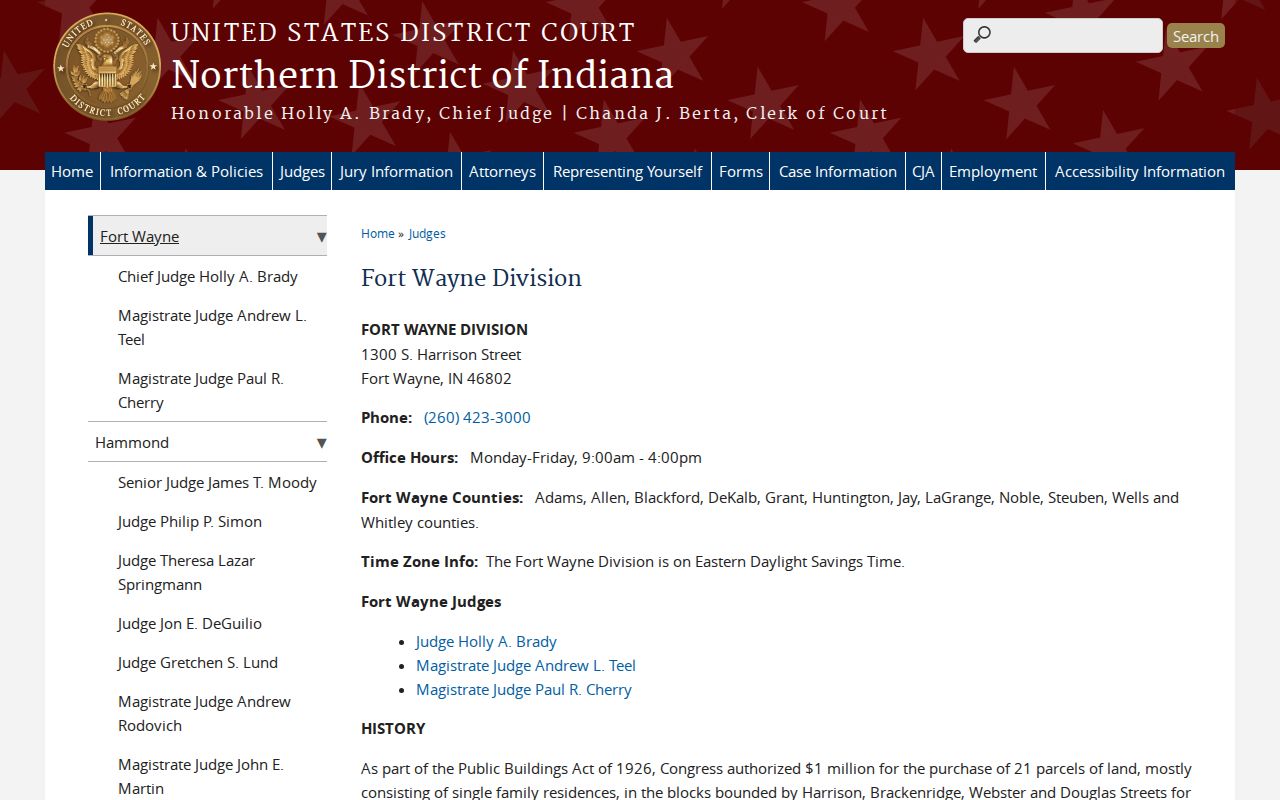
For divisions, procedures, and contacts, the federal court's own website is the authority. A Waterloo searcher should use MyCase for a DeKalb state case. PACER serves the federal district cases. Similar party names do not make the records interchangeable. The Northern District of Indiana home page gives the wider district context.
A failed name search in MyCase does not mean the case went federal. Most matters never do. Before you jump systems, ask what kind of case you are chasing. A state charge, a traffic citation, an eviction, or a county civil filing stays in the state system no matter how hard the online result is to find. Only a truly federal matter belongs in the federal docket.
Waterloo Bankruptcy and Phone Searches
Bankruptcy works differently from the Waterloo court docket you may know. Those cases live in the federal system. The Bankruptcy Court's Fort Wayne page shows the local federal access point, with its own case lookup separate from the DeKalb County clerk.
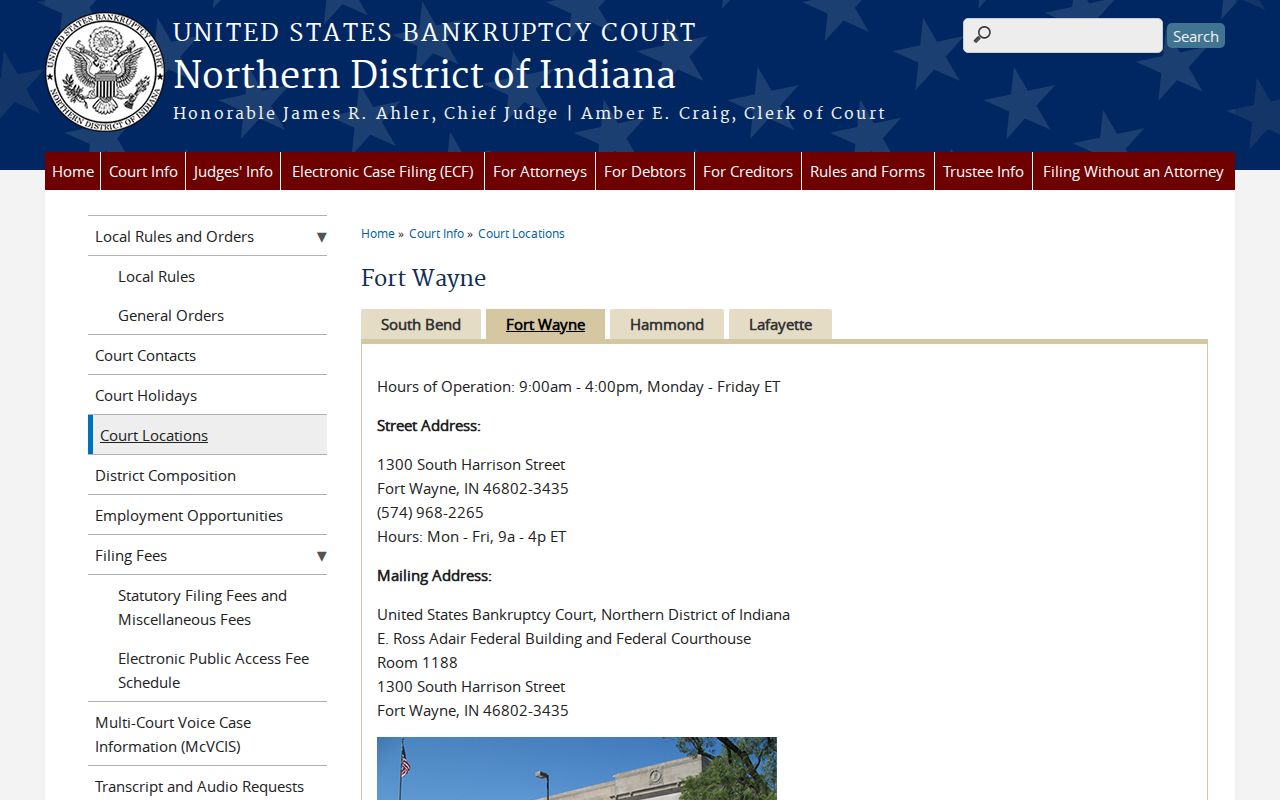
Living in Waterloo does not put a bankruptcy on the DeKalb County court docket. A petition, schedule, claim, or discharge is a federal filing. That record waits in the federal bankruptcy system. Watch for one catch, though. A foreclosure or collection tied to the same debt may sit in a separate DeKalb case. Check each matter in the court that actually created it.
Prefer a phone? The federal courts run a Multi-Court Voice Case Information System for basic case details. The official McVCIS instructions walk through the free call. They also cover the case-number format you will need.
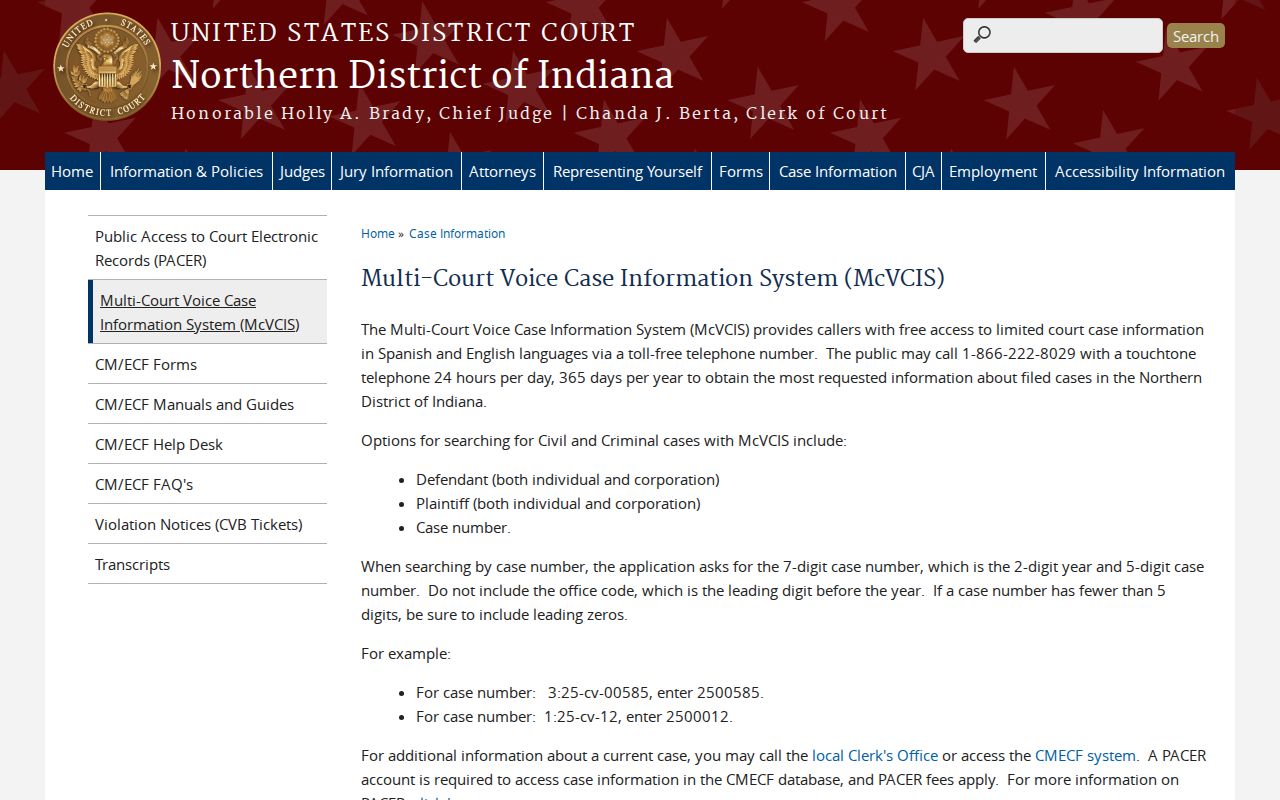
McVCIS has real limits. It cannot hand you a certified federal document, and it never reaches Indiana state cases. Think of it as a quick channel when the case belongs to the Northern District and you only need the basics.
Public Access to Waterloo Court Records
Indiana Access to Court Records Rule 4 starts from openness. Court records stay available to the public unless Rule 5 carves something out. Another court rule, a statute, or a court order can do the same. So a Waterloo case in the docket may show its header and event history. A protected filing or attachment may still stay hidden. Juvenile matters, mental-health records, and sealed or expunged cases can all fall under those restrictions. So can protection orders, confidential financial data, medical details, and identifying information. If something you expect is missing, use the court's own process to ask about it. Working around access controls is not the way.
Key Rules:
Indiana Access to Court Records Rule 4 states the general access rule and recognizes lawful exclusions.
Indiana Access to Court Records Rule 5 identifies confidential cases, records, and information excluded from public access.
Indiana Access to Court Records Rule 9 provides the extraordinary verified-request process for excluded records.
Indiana's Access to Public Records Act, Indiana Code 5-14-3, lets anyone ask a public agency for a record. The request just has to describe it with reasonable particularity. For judicial records, though, court access rules control. The docket and case file for Waterloo matters sit with the DeKalb County Clerk. The courts provide them through CCS. Town records are a separate lane handled by the Waterloo Clerk-Treasurer. Same word, clerk, but two distinct offices with two distinct record sets.